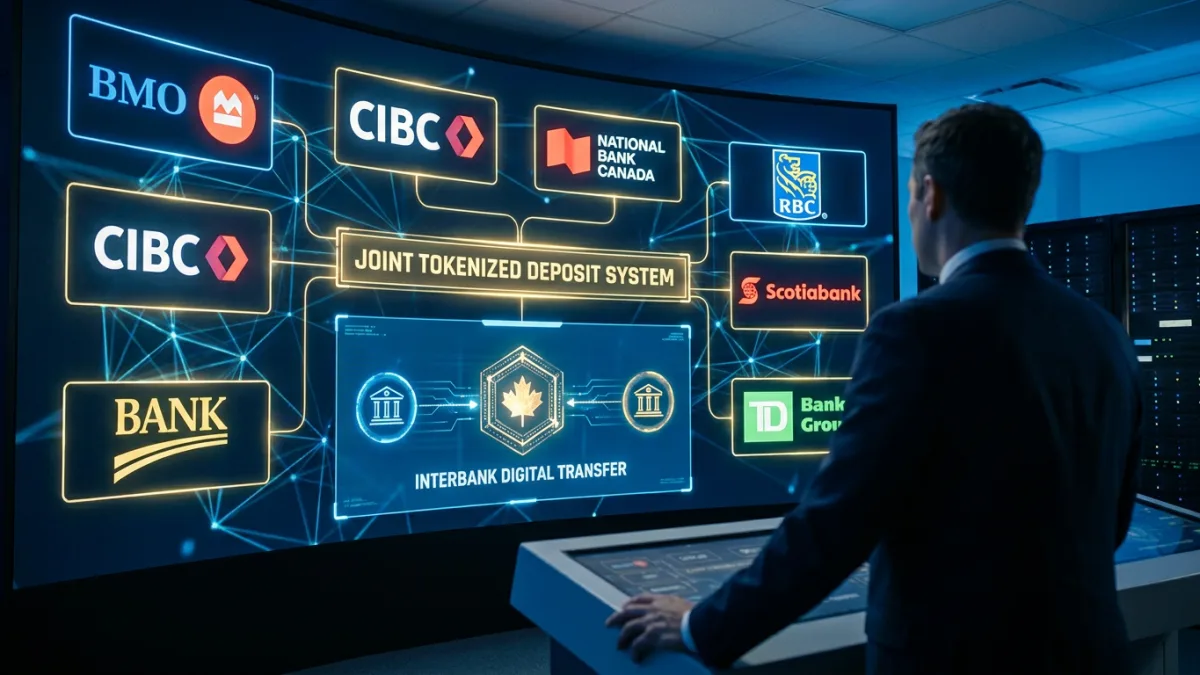
Canada’s six largest financial institutions have launched a joint initiative to develop a system for tokenized deposits, aiming to modernize how digital representations of Canadian dollars move between banks. The project includes major players like the Bank of Montreal, CIBC, National Bank of Canada, Royal Bank of Canada, Scotiabank, and TD Bank Group. The first phase of the initiative will focus strictly on transferring these digital assets between Canadian financial institutions.
This move follows a critical regulatory clarification from the Office of the Superintendent of Financial Institutions (OSFI). On September 10, the OSFI ruled that tokenized deposits are legally identical to traditional deposits, emphasizing that the underlying blockchain technology does not alter the financial product's legal status.
Unlike fiat-backed stablecoins - which are separate digital assets backed by issuer reserves - tokenized deposits remain a direct liability of the regulated bank holding the funds. The banks intend to use this system to enable faster, programmable payments, with future phases potentially integrating other digital asset networks and deposit-taking institutions.
Canada is simultaneously tightening its grip on the broader digital money ecosystem. In March, the country enacted the Stablecoin Act under Bill C-15, creating a federal framework for non-financial institution issuers.
Set to take effect in 2027, the law requires issuers to register with the Bank of Canada, maintain a 1:1 reserve of high-quality liquid assets, and guarantee par redemption. Crucially, these non-bank issuers are strictly prohibited from marketing their stablecoins as insured deposits, leaving traditional banks with a distinct regulatory advantage.
The Programmable Money Shift
The OSFI's decision to treat tokenized deposits as legally identical to traditional deposits is the regulatory green light traditional finance has been waiting for. By explicitly separating bank-backed programmable money from the upcoming 2027 Stablecoin Act framework, Canada is creating a two-tier digital currency system.
The Big Six banks are moving quickly to capture the programmable payments market before non-bank stablecoin issuers can establish dominance under the new rules. If this interbank tokenized deposit system succeeds, it could drastically reduce settlement times for corporate transactions and cross-border transfers, effectively neutralizing the primary utility of private stablecoins within the Canadian enterprise sector.