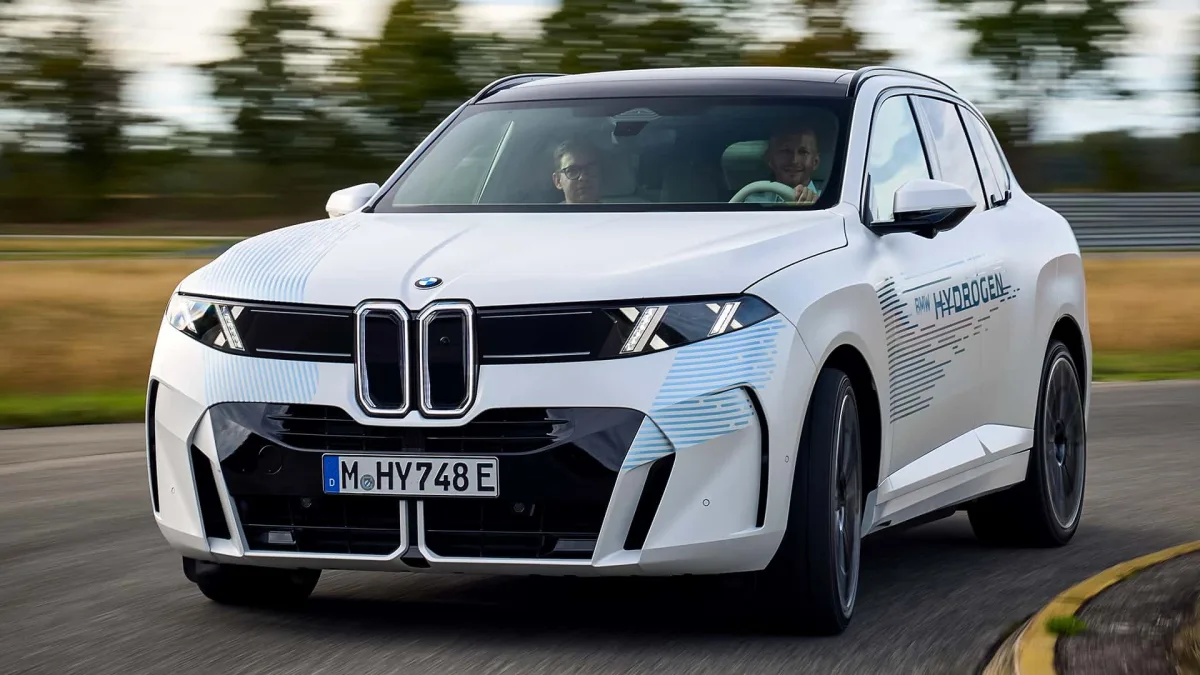
BMW is pushing its hydrogen ambitions into the performance realm, targeting a sub-5-second 0-62 mph sprint for the upcoming BMW iX5 Hydrogen. The fuel cell SUV is currently undergoing rigorous real-world validation ahead of its planned 2028 launch as the automaker's first series-production hydrogen model. This acceleration target places the hydrogen variant in the same performance bracket as the upcoming fully electric iX5, signaling a shift from mere efficiency to high-end driving dynamics.
The impressive performance relies on a third-generation fuel cell system co-developed with Toyota, building on a partnership that spans over a decade. This new unit is 25 percent smaller than its predecessor, freeing up crucial packaging space without sacrificing power output. Hydrogen is stored in a new flat, underfloor high-pressure tank system capable of holding up to 7 kilograms (15.4 pounds) of fuel. This setup allows BMW to quote a WLTP range of up to 750 kilometers (466 miles) on a single fill.
Refueling the BMW iX5 Hydrogen is expected to take under 5 minutes, closely mirroring the convenience of a traditional gasoline stop and significantly undercutting typical EV fast-charge sessions. To further emphasize its performance pedigree, the production model will come standard with xDrive all-wheel drive and the M Sport Package. This specific combination has not been offered on every version of the electric iX5, indicating BMW's strategy to position the hydrogen model as a premium performance tier.
The vehicle is built on the upcoming G65-generation X5 platform, which is designed to support gasoline, plug-in hybrid, fully electric, and hydrogen powertrains. Production for the broader new X5 family is slated to begin at Plant Spartanburg in December 2026. Meanwhile, hydrogen prototypes are currently enduring extreme temperature and high-altitude trials at the Aschheim test facility near Munich and the Miramas proving ground in southern France.
Industrial preparations are already advancing well beyond the design phase. BMW's Hydrogen Competence Centre in Munich has initiated a new assembly phase for the fuel cell system, while pre-series production of the Energy Master power electronics unit is underway at Plant Landshut. Additionally, Plant Steyr in Austria has installed initial test benches, and employee training for future series output has commenced.
The Infrastructure Gamble Behind the Performance
The BMW iX5 Hydrogen effectively solves the two most persistent pain points of battery-electric vehicles: range anxiety and charging downtime. By delivering 466 miles of range and a 5-minute refueling window, BMW is offering a zero-tailpipe-emission vehicle that demands zero behavioral changes from traditional combustion engine drivers. However, the success of this engineering marvel is entirely dependent on a factor outside of BMW's control: the hydrogen refueling network.
Currently, hydrogen infrastructure in the US and Europe remains severely underdeveloped, limited to a handful of isolated regional clusters. BMW's aggressive push into pre-series assembly and factory tooling shows immense confidence, but the 2028 launch window is a ticking clock for infrastructure expansion. If the refueling network does not scale rapidly over the next four years, the BMW iX5 Hydrogen risks becoming a brilliant piece of hardware with nowhere to run, making this project a massive geopolitical and infrastructural gamble rather than just a technical challenge.