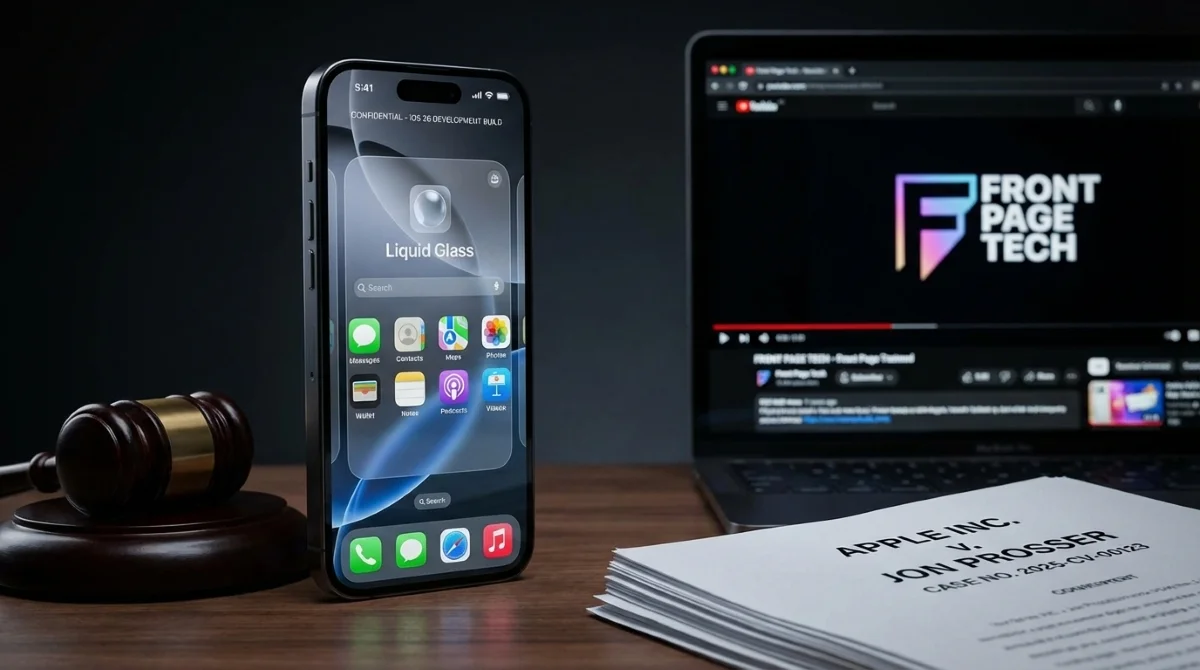
Apple has launched an unprecedented Apple iOS 26 leak lawsuit against prominent YouTuber Jon Prosser following a massive unauthorized disclosure of its operating system. The lawsuit accuses the Front Page Tech host of orchestrating a coordinated scheme to access an Apple employee's development iPhone and steal highly confidential trade secrets. This aggressive litigation marks a significant escalation in how the tech giant handles the unauthorized extraction of its software ecosystem.
The controversy centers around a series of videos published in early 2025, where Prosser detailed a major software overhaul internally known as "Liquid Glass." Originally misidentified by the rumor mill as iOS 19, the final software shipped as iOS 26, featuring a design language heavily inspired by the Vision Pro headset. According to reporting by The Verge, Prosser claimed with absolute certainty that his re-created interface mockups were based on authentic, unreleased Apple software.
The Alleged Development iPhone Heist
Court documents reveal that Apple's investigation began after receiving an anonymous tip detailing a FaceTime call between Prosser and Michael Ramacciotti, a friend of Apple employee Ethan Lipnik. The complaint alleges that Ramacciotti accessed Lipnik's improperly secured development device while the employee was out of the house. During this call, Prosser allegedly recorded the unreleased interface, capturing granular details of the operating system months before its official reveal.
The legal proceedings have heavily favored Apple thus far, with a court clerk entering a default judgment against Prosser after he missed an August 2025 deadline to respond to the complaint. While Ramacciotti claims he was paid $650 after the call but denies a grand conspiracy, Prosser has publicly disputed the "heist movie" narrative. As noted in the original report, Prosser is currently attempting to retain counsel to set aside the default judgment and participate in his own defense.
Key Features Exposed in the iOS 26 Leak
While Apple ultimately released the software at its Worldwide Developers Conference, the initial leaks spoiled several major architectural changes. Based on the compromised development device, the early disclosures revealed:
- A complete visual overhaul utilizing the new "Liquid Glass" design system.
- Interface elements and app animations directly ported from the VisionOS spatial computing environment.
- Redesigned layouts for the Lock Screen and Home Screen.
- Updated core app interfaces that align with Apple's modern aesthetic guidelines.
My Take: The Chilling Effect on the Rumor Mill
Apple’s decision to publicly litigate the iOS 26 leak signals a fundamental shift in its corporate security strategy. Historically, the company ignored rumors to avoid giving them credibility, but the explicit targeting of Prosser and his $650 payment to a source crosses a legal threshold from passive reporting to active corporate espionage. By naming the specific individuals and detailing the FaceTime extraction method, Apple is sending a clear, aggressive warning to the broader hardware accessory and tech media industries.
This lawsuit will likely freeze the secondary market of Apple leaks, forcing creators to rely on vague supply chain whispers rather than direct software extraction. For everyday users, this means fewer accurate early looks at upcoming operating systems, preserving the "grand reveal" culture that Apple has fiercely protected since the Steve Jobs era. The default judgment against Prosser also sets a dangerous precedent for independent creators who traffic in unreleased corporate data.
This article was written by AI from reporting by theverge.com.