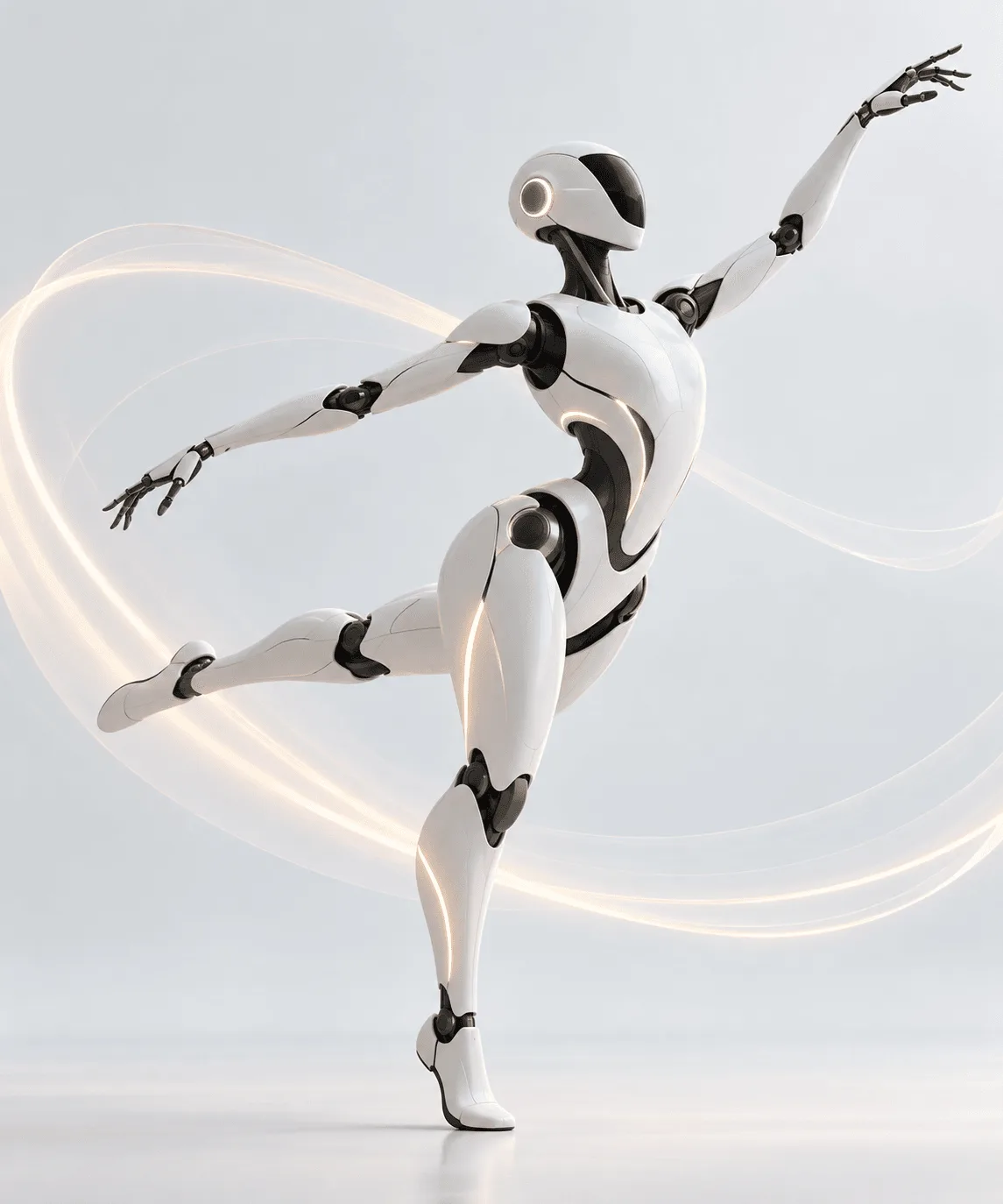
AgiBot has officially launched AGILE 2.0, an advanced sense-control locomotion model designed to eliminate the lag between what a humanoid robot sees and how it moves. Short for AGIBOT Generative Intelligent Locomotion Engine, the new software folds visual perception, terrain understanding, and whole-body motion into a single end-to-end loop. This upgrade fundamentally shifts robotic operations away from the traditional, bolted-together "walk then manipulate" approach, enabling fluid loco-manipulation in open, unpredictable environments.
While the previous iteration, AGILE 1.0, successfully linked perception to motion, it still lacked the unified dynamics required for high-speed interaction and precise contact switching. AGILE 2.0 solves this by removing intermediate stage splits entirely. Cameras now drive planning and control continuously, ensuring that delayed visual data does not cause millisecond-scale actuators to jitter when the robot is already mid-stride.
To demonstrate these capabilities, AgiBot showcased a series of complex maneuvers on the Lingxi X2 platform. The robot successfully executed fire-hoop jumps, diabolo play, multi-robot long-rope skipping, and cooperative box stacking. In what the company claims is a first for bipedal humanoids, the robot also managed to balance while rolling atop a large ball, a sequence that heavily stresses continuous visual feedback under highly unstable contact conditions.
Beyond the spectacle of these demonstrations, AgiBot is emphasizing deployment-ready behaviors for industrial and commercial use. The system supports real-time visual closed loops to navigate changing obstacles, cross-robot state sharing for multi-agent tasks, and safe recovery protocols when humans enter the workspace. The software pairs directly with AgiBot's separately published GE-Act 2.0 world-action scaling work, creating a comprehensive two-layer stack for locomotion and manipulation.
The Gap Between Staged Demos and Factory Floors
The visual demonstrations of AGILE 2.0 are undeniably impressive, but the true test of this locomotion model lies in its unscripted reliability. AgiBot has heavily promoted the system's ability to reduce custom engineering for unstructured sites, yet the announcement notably lacked measured success rates, latency budgets, or third-party reproductions. Without these hard metrics, circus-style balancing acts remain highly controlled marketing exercises rather than proof of industrial readiness.
For AGILE 2.0 to genuinely disrupt the robotics market, its "eyes-open" dynamic balance must hold up against the chaotic variables of a real-world warehouse or factory. Sudden lighting changes, unpredictable human bystanders, and shifting floor conditions will stress the end-to-end loop far more than a predictable rolling ball. If AgiBot can deliver transparent field metrics that match their video demonstrations, this two-layer stack could set a new baseline for autonomous humanoid deployment.