Fintech founders frequently pitch total market disruption, but in institutional credit markets, the most durable path to scale is fintech workflow modernization. Across leveraged loans and Collateralized Loan Obligations (CLOs) - markets valued at roughly $1.5 trillion and $1.3 trillion, respectively - core trading workflows have historically relied on fragmented emails, phone calls, and chatrooms. The platforms gaining actual traction are not attempting to replace these institutional behaviors outright; instead, they are upgrading the underlying infrastructure to handle modern volatility and integrate emerging technologies.
This shift is critical for buyside firms, institutional traders, and fintech developers aiming to build scalable market structures. By digitizing existing protocols rather than forcing behavioral changes, these platforms reduce trade-booking risks and create the interoperable foundation required for the next major evolution: the deployment of AI-driven trading systems.
Digitizing Legacy Protocols for Immediate Liquidity
One of the primary questions institutional traders ask when evaluating a new platform is how seamlessly it fits into their current daily operations. The most effective fintech solutions have digitized established auction formats, such as Bid Wanted In Competition (BWICs) and Requests for Quote (RFQs). By moving these processes out of manual chatrooms and into centralized digital venues, platforms can compress auction timelines that previously took hours into mere minutes.
This modernization gives clients near-immediate access to liquidity across a broad dealer network. It also introduces pre-trade analytics that provide a realistic preview of executable liquidity, allowing buyside firms to make data-backed decisions before committing. Scale in this sector is achieved by reducing the effort required to execute a trade, rather than forcing highly sophisticated participants to learn entirely new trading protocols.
Scale comes from reducing effort, not forcing behavior change.
- Brian Bejile, CEO, Octaura
Deep Integration and Straight-Through Processing
A durable advantage in market structure rarely stems from a single standalone feature. Instead, it relies on deep integration with the infrastructure that traders already use. Tight connectivity between buyside Order Management Systems (OMS) and dealer platforms enables straight-through processing (STP), covering the entire lifecycle from execution to booking.
In markets that have historically suffered from operational errors due to manual trade entry, this level of interoperability significantly reduces post-trade breaks and booking risks. Once a firm connects its existing systems to a modernized venue, routing activity through that platform becomes operationally safer than manual alternatives. This growing network of connected buyside and sellside participants naturally improves price discovery and tightens execution without adding friction.
Proving Resilience During Market Volatility
In institutional trading, a platform's credibility is not established during calm market conditions; it is earned when liquidity dries up and conditions deteriorate. Recent market events have stress-tested these modernized infrastructures. During the Liberation Day-related volatility in April 2025, uncertainty heavily impacted loan and CLO markets.
A similar stress test occurred during the AI-induced market sell-off in Q1 2026. These periods of high volatility reinforce a core principle of market structure: participants will only rely on venues that remain transparent, dependable, and operationally resilient when the market is under severe pressure. Reliability during these exact moments is the ultimate differentiator for any fintech platform.
The Infrastructure Prerequisite for AI Trading
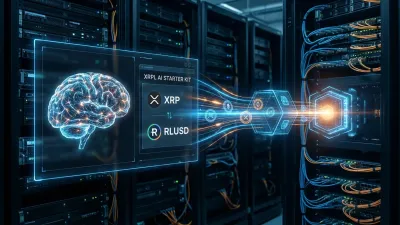
The next evolution in institutional markets extends beyond basic electronification; it requires a convergence of automation, transparency, and resilience to support agentic AI. In equities, rates, and increasingly in investment-grade and high-yield bonds, algorithmic trading is already the standard. Dealers routinely blend human judgment with algorithms to price risk and manage inventory, and the buyside is rapidly following suit.
Trading fundamentally involves executing a strategy based on available data - precisely the type of problem AI agents are designed to solve. However, AI does not eliminate the human trader; it augments them. For this augmentation to function at an institutional scale, the surrounding infrastructure must be fully interoperable across OMS platforms, data sources, and execution venues, providing the clean data and auditability that intelligent systems require.
The Hidden Barrier to AI Adoption
The rush to deploy AI trading agents often ignores a fundamental reality: an AI model is only as effective as the market plumbing it connects to. While firms are eager to leverage generative AI for strategy execution, those relying on legacy, fragmented workflows will find their AI agents paralyzed by bad data and post-trade settlement failures. The true competitive advantage over the next decade will not belong to the firm with the smartest algorithm, but to the firm with the most seamlessly integrated infrastructure.
By focusing on straight-through processing and digitizing protocols like BWICs, platforms like Octaura are essentially building the necessary tracks for AI to run on. If a buyside firm cannot achieve clean, automated execution during a volatility spike like the Q1 2026 sell-off, adding an AI agent to the mix will only execute bad trades faster. Modernizing the workflow is no longer just about operational efficiency; it is the mandatory first step before any meaningful AI integration can occur.