Understanding traffic potential vs search volume is the defining factor between a theoretical SEO strategy and one that actually drives revenue. While search volume merely estimates the raw monthly demand for a specific keyword, traffic potential calculates the realistic number of organic visitors a page can capture by ranking for a primary term and its long-tail variations. For digital marketers and SEO professionals, shifting focus from vanity search metrics to actual traffic potential enables more accurate forecasting and better resource allocation.
Historically, SEO campaigns were built entirely around finding keywords with the highest possible monthly searches. However, this approach fails to account for modern search engine behavior, where ranking position, click-through rates (CTR), and rich search features heavily dictate how many users actually click a link. By prioritizing traffic potential, content strategists can target winnable terms that deliver tangible business value rather than chasing impressive but empty search numbers.
The Illusion of Raw Search Volume
Search volume measures how many times people query a specific keyword within a given period, typically presented as a monthly average. It acts as a baseline demand indicator, revealing how popular a topic is across search engines like Google or YouTube. SEO platforms gather this data from multiple sources; for instance, Google Keyword Planner relies on actual search engine data, while tools like Semrush and Ahrefs combine that data with clickstream information from browser extensions.
These tools typically display an average calculated over 12 months to smooth out seasonal spikes, providing a stable baseline. However, this raw number can be highly deceptive due to geographic and temporal fluctuations. A keyword might boast 10,000 searches globally, but only register 400 searches in the UK. Furthermore, search volume is highly susceptible to seasonality and trending events.
For example, searches for Christmas gifts naturally spike in November and December, while tax software queries peak in March and April. Similarly, a viral news story can multiply search volume by 1,000% for a few days before rapidly settling back to its baseline. Relying solely on these inflated numbers without understanding the context often leads to misaligned content strategies and missed targets.
Why Traffic Potential Reflects Reality
Traffic potential estimates the total amount of organic visitsand subsequently, revenue or clicksyour business could generate if you achieved top rankings for a commercially valuable keyword and all its related terms. Unlike isolated search volume, traffic potential considers the holistic search landscape. It factors in your actual ranking position, expected click-through rates, the presence of SERP features, and the aggregate traffic from secondary keywords.
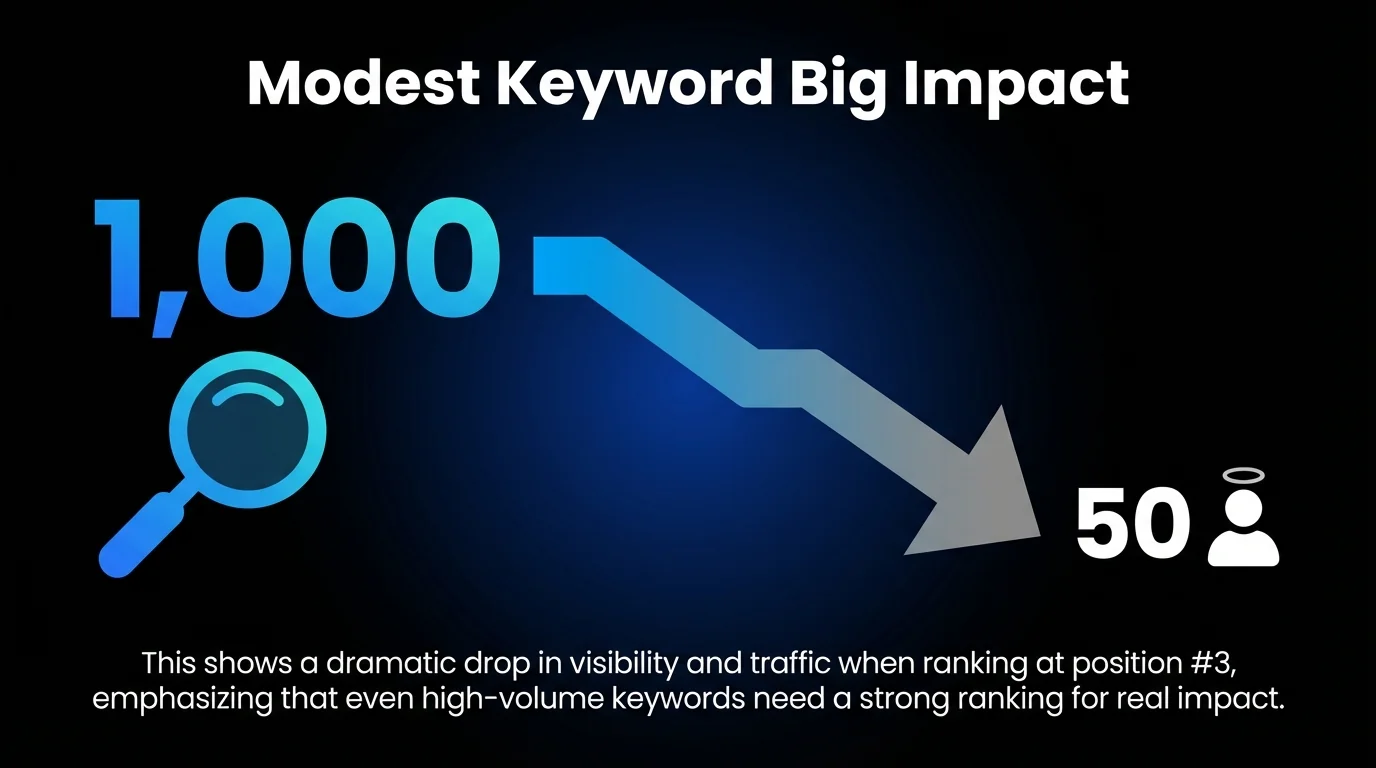
This metric answers the most critical question in SEO: how much traffic can this page actually bring? The difference between theoretical demand and practical opportunity is stark. For instance, a primary keyword with 1,000 monthly searches might only send you 50 visitors if you rank in the third position. Conversely, targeting ten highly relevant, related keywords with 100 searches each could deliver 500 visitors if you successfully capture the top positions across all of them.
Most optimized pages do not rank for just a single exact-match keyword; they rank for dozens or even hundreds of related variations. If a page targets the parent topic 'content marketing strategy', it will likely also rank for long-tail variations like 'how to create content marketing strategy' or 'B2B content marketing tactics'. Traffic potential calculates the combined yield from this entire cluster, providing a highly realistic estimate of total page performance.
The Impact of Click-Through Rates and SERP Features
Not everyone who searches for a term clicks on an organic result, making CTR a vital component of traffic potential calculations. Statistical data shows a steep drop-off in user engagement as you move down the page. Position one typically captures 30-40% of all clicks, while position two secures only 15-20%. By the time a user reaches position ten, click rates plummet to below 5%.
Traffic potential directly factors in these CTR realities by analyzing the top-ranking page for a keyword and estimating total traffic based on what that specific page actually receives. This methodology reveals hidden opportunities that raw search volume obscures. A keyword with modest search volume but exceptionally high click-through rates will often outperform a high-volume keyword that is heavily dominated by paid ads and featured snippets.
Consider a scenario where a keyword with 10,000 searches only drives 2,000 visits to the top organic result due to heavy SERP distractions. In contrast, a highly focused keyword with only 1,000 searches could deliver 800 visits if it benefits from better click-through rates and a clean search interface. This proves that high search volume looks attractive on a spreadsheet, but it absolutely does not guarantee traffic.
| Metric | Definition | What It Measures | Real-World Yield Example |
|---|---|---|---|
| Search Volume | Average monthly queries for a single exact-match keyword. | Theoretical market demand and topic popularity. | 10,000 searches (Global) vs 400 searches (UK). |
| Traffic Potential | Estimated total organic visits from a parent topic and all related terms. | Realistic traffic opportunity based on CTR and SERP layout. | 1,000 searches yielding 800 visits due to high CTR. |
To effectively pivot your SEO strategy from chasing volume to capturing potential, follow these actionable steps during your keyword research phase:
- Analyze the parent topic in your SEO tool to identify the total aggregate traffic of the current top-ranking page, rather than just looking at the primary keyword's volume.
- Evaluate the search engine results page (SERP) for crowding; identify if ads, featured snippets, or AI overviews are pushing organic links below the fold and reducing potential CTR.
- Group related long-tail keywords into a single content cluster to calculate the combined traffic potential you can achieve by ranking for the entire topic ecosystem.
Frequently Asked Questions
What is the main difference between search volume and traffic potential?
Search volume measures the raw number of times a specific keyword is searched per month. Traffic potential estimates the actual number of visitors you will get, factoring in your ranking position, click-through rates, and traffic from related long-tail keywords.
Why does a high-volume keyword sometimes bring low traffic?
High-volume keywords often feature crowded search results pages filled with paid advertisements, featured snippets, and direct answers. These elements steal clicks from organic links, meaning even a top-three ranking might yield a very low click-through rate.
How do SEO tools calculate traffic potential?
Tools like Ahrefs and Semrush calculate traffic potential by analyzing the current top-ranking page for your target keyword. They look at all the different terms that specific page ranks for and sum up the estimated organic traffic it receives across the board.
My Take
Relying solely on raw search volume is rapidly becoming an obsolete SEO practice. The data clearly shows that securing position one yields 30-40% of clicks, but this percentage is under constant threat from evolving search interfaces. As search engines integrate more zero-click features and AI-generated summaries at the top of the page, the gap between theoretical search volume and actual traffic potential will only widen. The example of a 10,000-search keyword delivering only 2,000 visits perfectly illustrates the danger of vanity metrics. To build a resilient digital strategy in 2026, marketers must prioritize traffic potential, focusing on topic clusters and long-tail variations where the intent is high and the path to an actual click remains unobstructed.
This article was written by AI from reporting by quuu.co.