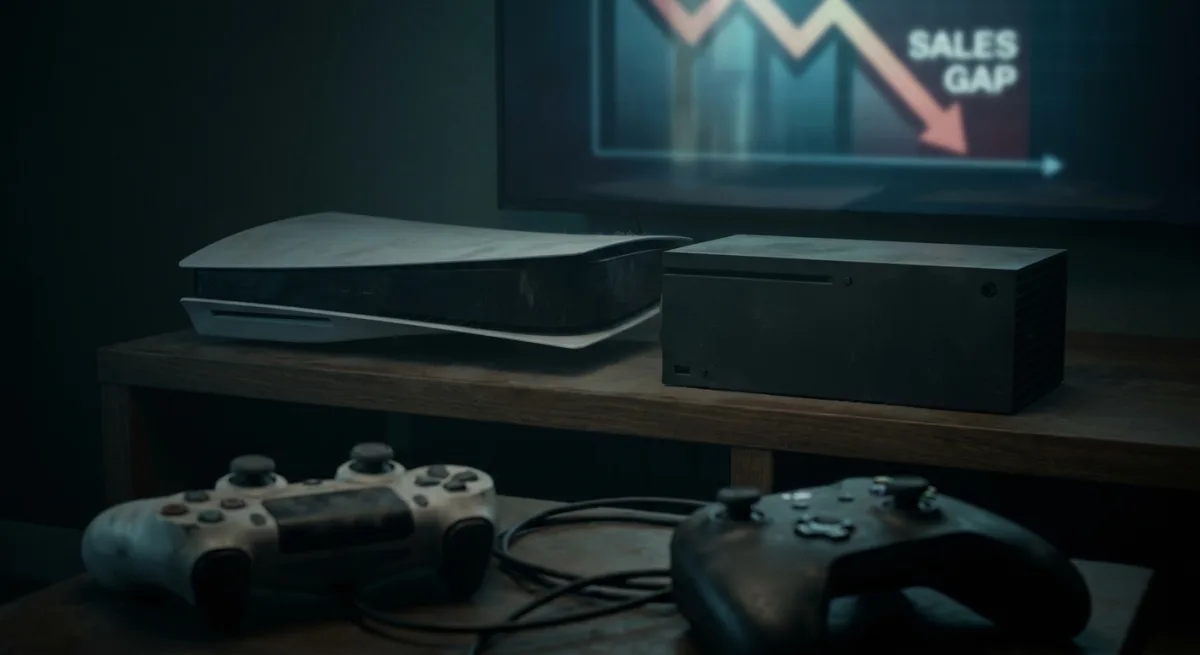
The current generation of gaming consoles is officially losing ground to its predecessors, with PS5 and Xbox Series sales falling further behind the historic pace set by the PlayStation 4 and Xbox One. As the industry enters the 65th month of the current console lifecycle, the combined sales gap has widened significantly. This data signals a potential slowdown in hardware adoption for both Sony and Microsoft as they navigate the latter half of this generation.
According to the latest hardware estimates from VGChartz analyst William D'Angelo, the combined aligned sales of the PlayStation 5 and Xbox Series X|S have reached 126,091,354 units globally as of March 2026. In stark contrast, the PlayStation 4 and Xbox One had sold a combined 143,436,563 units at the exact same point in their lifecycle (March 2019). This leaves the current generation trailing by a massive 17,345,209 units.
The momentum shift has become particularly evident over the past year. In the last 12 months alone, the PS4 and Xbox One outpaced the current generation's equivalent timeframe by 7,135,391 units. Even in the most recent month of March 2026, the gap grew by an additional 549,982 units in favor of the older hardware.
By the Numbers: Current Gen vs. Last Gen
Because the PlayStation 5 and Xbox Series X|S launched in November 2020, and the PlayStation 4 and Xbox One launched in November 2013, their holiday sales periods align perfectly for a direct month-to-month comparison. The data below illustrates the exact hardware deficit at Month 65.
| Sales Metric (Month 65) | PS5 & Xbox Series X|S | PS4 & Xbox One |
|---|---|---|
| Total Combined Sales | 126,091,354 | 143,436,563 |
| Total Lead | - | + 17,345,209 |
| 12-Month Gap Change | - | + 7,135,391 |
| 1-Month Gap Change (March) | - | + 549,982 |
| Lifetime Sales | N/A | 175,160,000 |
Currently, the PS5 and Xbox Series X|S remain 49.07 million units behind the final lifetime sales of the PS4 and Xbox One, which capped out at a combined 175.16 million units. Given the current downward trajectory, closing this nearly 50-million-unit gap before the end of the generation appears increasingly unlikely.
The Late-Generation Hardware Fatigue
The loss of 7.1 million units over the last 12 months is not just a slight dip; it represents a structural shift in how consumers are engaging with the PS5 and Xbox Series sales ecosystem. The PS4 and Xbox One thrived in their 65th month (March 2019), fueled by a steady stream of massive late-generation exclusives and aggressive price cuts that enticed late adopters. The current generation, however, is operating under entirely different market conditions.
Today, Sony and Microsoft are battling rising manufacturing costs that have largely prevented the deep hardware discounts historically seen at this stage of a console's life. Furthermore, the industry is experiencing a noticeable drought in system-selling exclusive titles, while a broader consumer shift toward PC gaming and cloud gaming (Cloud Gaming) continues to cannibalize traditional console sales. If this trajectory holds, the current generation will likely never catch the 175.16 million lifetime benchmark set by its predecessors.
This widening gap forces a critical reevaluation of the traditional console business model. With hardware sales slowing down faster than anticipated, both platform holders will likely need to accelerate their transition toward subscription services, cross-platform play (Cross-platform Play), and digital ecosystems to maintain revenue growth as they prepare for the next generation of hardware.