Sony is officially killing off physical PlayStation game discs by 2028, yet consumer demand for the PS5's attachable disc drive remains so overwhelmingly high that the company is still strictly rationing sales to one per customer. This stark contrast highlights a massive disconnect between corporate digital-only strategies and actual player preferences. On July 1, Sony announced plans to end the production of physical discs for PlayStation games, effective January 2028. After this cutoff, newly released titles will only be available in digital formats, though retail stores will continue selling digital download codes.
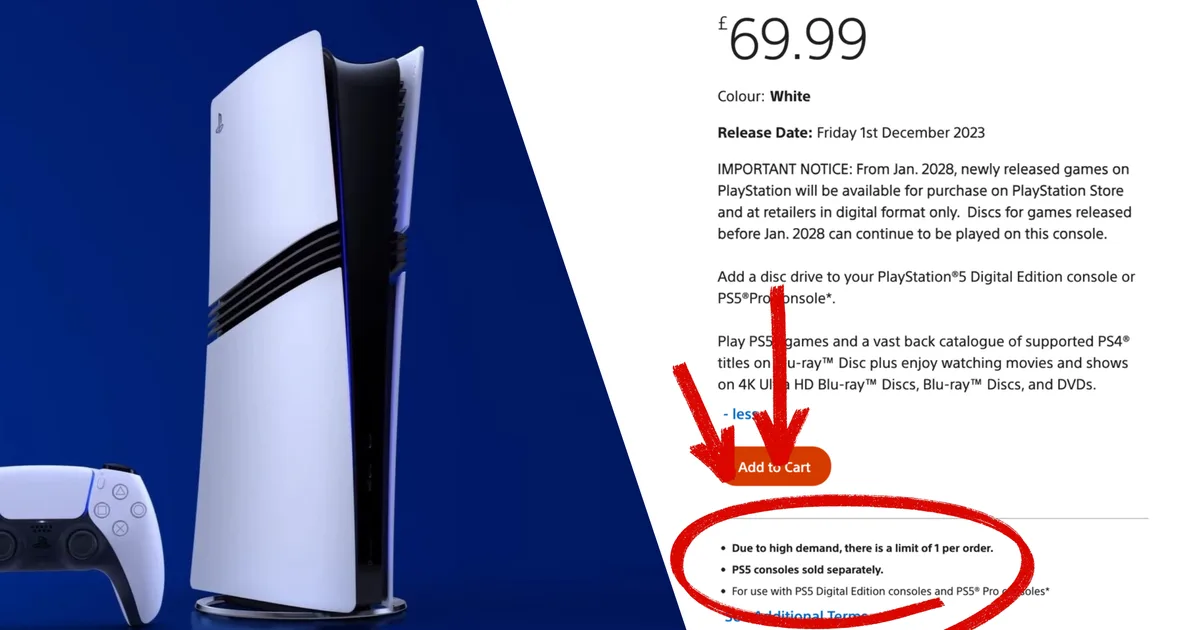
However, a quick glance at the PlayStation Store reveals an "important notice" limiting the standalone disc drive to just "1 per order" due to sustained high demand. This restriction is not a sudden reaction to the news; the rationing has quietly been in place since at least November 2023. The store page now explicitly warns buyers that from January 2028 onward, newly released games will be digital-only, though older discs will continue to function on current hardware.
This 2028 deadline all but confirms that the upcoming PlayStation 6 will launch entirely without physical media support. Meanwhile, Microsoft is reportedly taking a similar path with its next-generation console, codenamed Project Helix, which is also expected to ship without a disc drive. However, rumors suggest Microsoft is developing a system to grant digital licenses to players who already own physical Xbox discs, potentially softening the blow for collectors.
The gaming community has been quick to point out the irony of Sony struggling to keep physical drives in stock while simultaneously declaring the format dead. Commenters on the ResetEra forums noted that the situation "would be so funny if it weren't so sad," underscoring the frustration of players who still rely on physical media for game preservation and the second-hand market.
The Digital Transition Is Moving Faster Than Players
The fact that Sony has had to ration disc drives for years proves that a massive segment of the PlayStation base still values physical ownership, used game trading, and preservation. By forcing a hard cutoff in 2028, Sony is prioritizing the higher profit margins of the digital PlayStation Store over consumer choice, effectively locking players into a single, price-controlled ecosystem.
If Microsoft successfully implements a disc-to-digital license conversion for Project Helix, it could give Xbox a significant pro-consumer advantage in the next console generation. Sony's abrupt physical phase-out, combined with its inability to meet current hardware demand, risks alienating a dedicated core of physical collectors who may look to competitors that offer a smoother transition away from discs.
This article was written by AI from reporting by eurogamer.net.