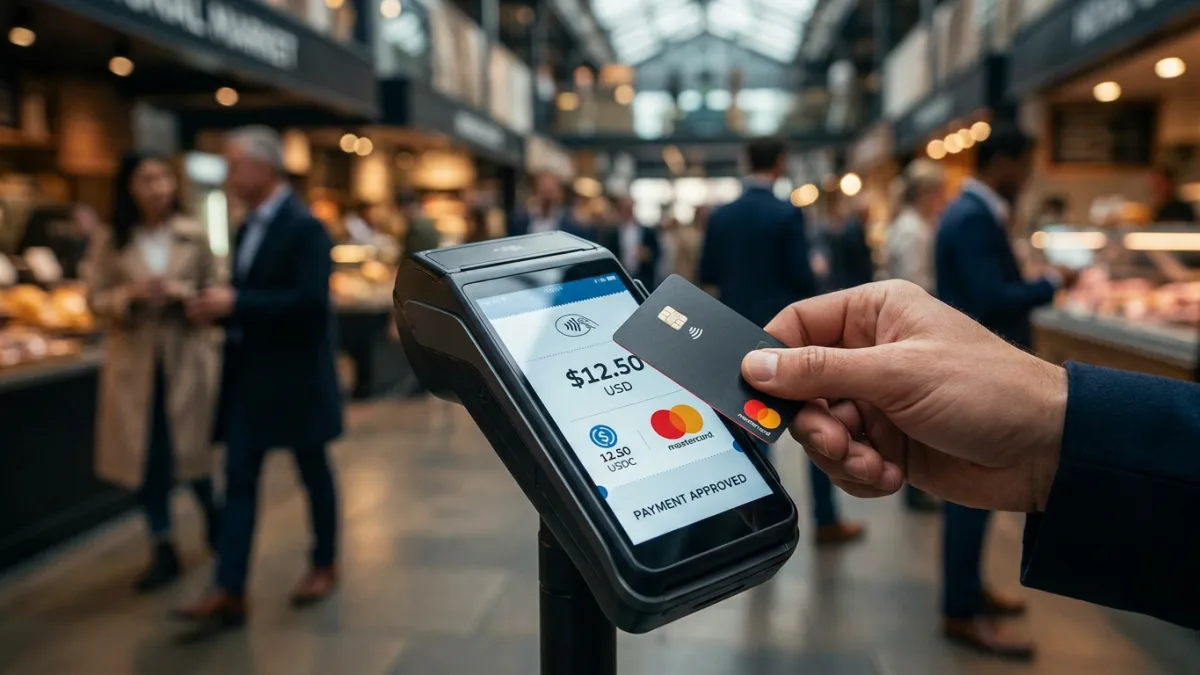
Mastercard stablecoin integration and similar moves by major payment networks coincide with a massive surge in digital dollar transactions, which reached $482 billion in the first nine months of 2026, according to a report by blockchain analytics firm Allium. This 45 percent increase from a year earlier contrasts with the broader market's circulating supply, which stood at approximately $305 billion at the end of September, up just 0.4 percent since the start of the year.
The number of payments jumped 71 percent to over 1 billion, indicating that existing digital dollars are changing hands more frequently without much new supply entering the market. Stablecoin-linked card spending saw significant growth, reaching $3.9 billion through September, ten times the amount recorded a year earlier. Allium noted that small purchases under $50 accounted for 84 percent of this increase in card transactions.
Stablecoins meet traditional payment rails
Major financial networks are increasingly incorporating stablecoins into their global infrastructure. Mastercard introduced its Global Money Platform alongside BVNK, a stablecoin infrastructure firm it acquired in August. The service connects traditional currency accounts, stablecoin balances, conversions, card spending, and bank payouts through a single connection. Payments firms Nuvei and Marqeta are among the first customers to integrate the platform, which allows banks and fintechs to offer accounts holding both fiat currencies and stablecoins.
Stripe is collaborating with blockchain-based financial services firm Plasma XPL on cards that support eligible stablecoins alongside balances in dollars, euros, Brazilian reais, Mexican pesos, and Colombian pesos. The companies plan to allow customers to spend from the balance that matches their purchase to reduce unnecessary currency conversions. Stripe's expanded card infrastructure currently covers more than 30 countries, with plans to reach over 100 by next year.
Visa is integrating stablecoins into the funding side of international transfers. The company announced that payment orchestration firm Inyo Global is the first provider to use Visa Direct's stablecoin prefunding service commercially. This allows payment firms to use Circle's USDC stablecoin to fund cross-border payouts in near real-time, bypassing traditional banking windows while recipients still receive funds through conventional channels.
A small slice of a vast payments market
Despite the rapid growth, stablecoin payments remain a fraction of the broader financial ecosystem. Out of $97.9 trillion in raw stablecoin transfers through September, Allium classified only $2.4 trillion, or 2.5 percent, as end-user activity after filtering out automated transactions, decentralized finance, and exchange activity. The $482 billion payments estimate is drawn from this smaller pool.
Furthermore, Allium estimated that second-quarter spending through stablecoin cards represented just 0.03 percent of Visa's $4 trillion in payment volume, leaving a large market for payment companies to pursue.
The push for integrated financial operations
For payment companies, the integration of blockchain rails reflects a shift toward unified financial systems. Nuvei CEO Phil Fayer stated that “the future of global commerce depends on money moving as freely as the businesses and consumers it serves, across borders, currencies and increasingly, between traditional and digital forms of money.”
Businesses don't want separate crypto infrastructure sitting alongside their existing financial operations. They want to move between fiat and stablecoins within the same payments and treasury environment.
Patrick Mollard, Co-founder and CEO, Fipto
According to a note shared with CoinDesk, Mollard added that “the distinction between 'traditional' and 'digital' money is less important than giving businesses the ability to use whichever rail makes most sense for a particular payment or treasury operation.”
This article was written by AI from reporting by coindesk.com.