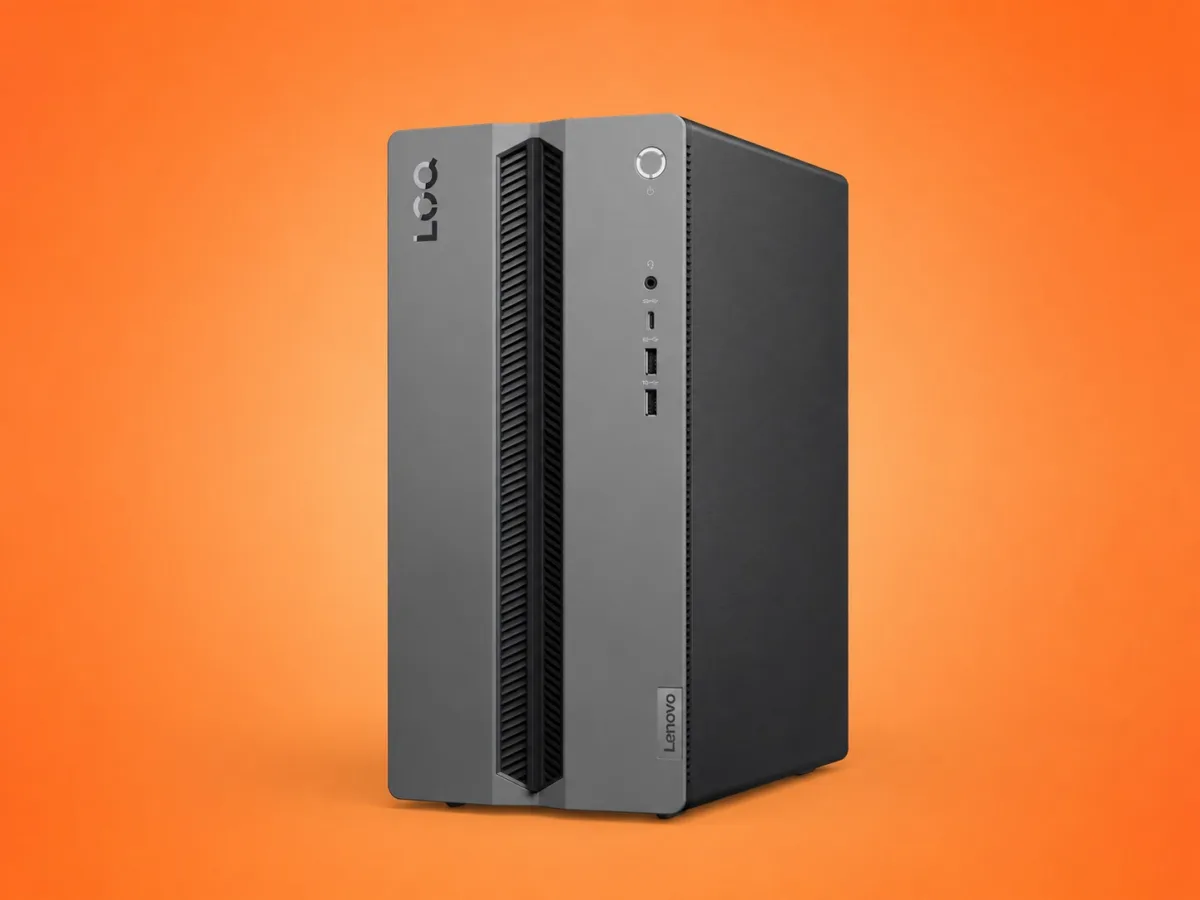
Lenovo is expanding its entry-level gaming lineup with the LOQ Tower 17IRH11, a 17-liter desktop that unusually pairs Intel Core 200 series mobile processors with desktop-class Nvidia RTX 50-series graphics. Designed for budget-conscious gamers, this new system aims to deliver solid 1080p performance without breaking the bank. The desktop was announced alongside the budget-oriented LOQ Essential 15IRH11 and 15IPH11 gaming laptops, which are already rolling out in select Asian markets.
According to Lenovo's PSREF website, the LOQ Tower 17IRH11 will be powered by either the Intel Core 5 205H or the Core 7 230H. These Raptor Lake laptop chips are a step down from the more powerful Core Ultra 7 255HX found in the current LOQ Tower Gen 10, but they help keep overall manufacturing costs low. The system supports up to 32GB of dual-channel DDR5-5200 RAM utilizing two SODIMM slots, further highlighting its mobile-hardware roots.
The graphics options are where the desktop truly shines for modern gaming. Buyers can configure the machine with Nvidia's latest GPUs, including the RTX 5050, RTX 5060, and RTX 5060 Ti, which are well-equipped to handle modern titles at 1080p resolution. Curiously, Lenovo is also offering the older RTX 3050 as a baseline option. Storage configurations max out at a 1TB PCIe Gen 4 SSD out of the box, but the chassis provides ample room for expansion with two M.2 slots and an additional 3.5-inch drive bay.
Rounding out the specifications, the desktop includes a choice of a 400W or 500W power supply and features modern connectivity like Wi-Fi 7. The front panel offers convenient access to a 5Gbps USB-C port and a 10Gbps USB-A port. While Lenovo has not yet announced official pricing or a firm release date, multiple regional SKUs have already appeared on the company's PSREF website for European markets, including Germany, Italy, Switzerland, and the Nordic countries.
The Mobile-to-Desktop Strategy Pays Off for 1080p Gamers
Lenovo's decision to use Intel's mobile Raptor Lake processors in a 17-liter desktop chassis is a calculated compromise. By saving on CPU costs and utilizing SODIMM memory, Lenovo can allocate more of the budget toward the GPU, which is the actual bottleneck for 1080p gaming. Pairing a modest Core 5 205H with an RTX 5060 Ti will yield significantly better gaming frame rates than a high-end desktop CPU bottlenecked by a weaker graphics card.
However, the inclusion of the aging RTX 3050 in the 2026 lineup is a trap for uninformed buyers. Consumers should strictly aim for the RTX 50-series configurations to ensure the system remains viable for upcoming releases. If priced aggressively in the European market, this hybrid mobile-desktop approach could set a new standard for entry-level prebuilt systems.
This article was written by AI from reporting by notebookcheck.net.