Privacy-First Voice Interaction Arrives on Duck.ai
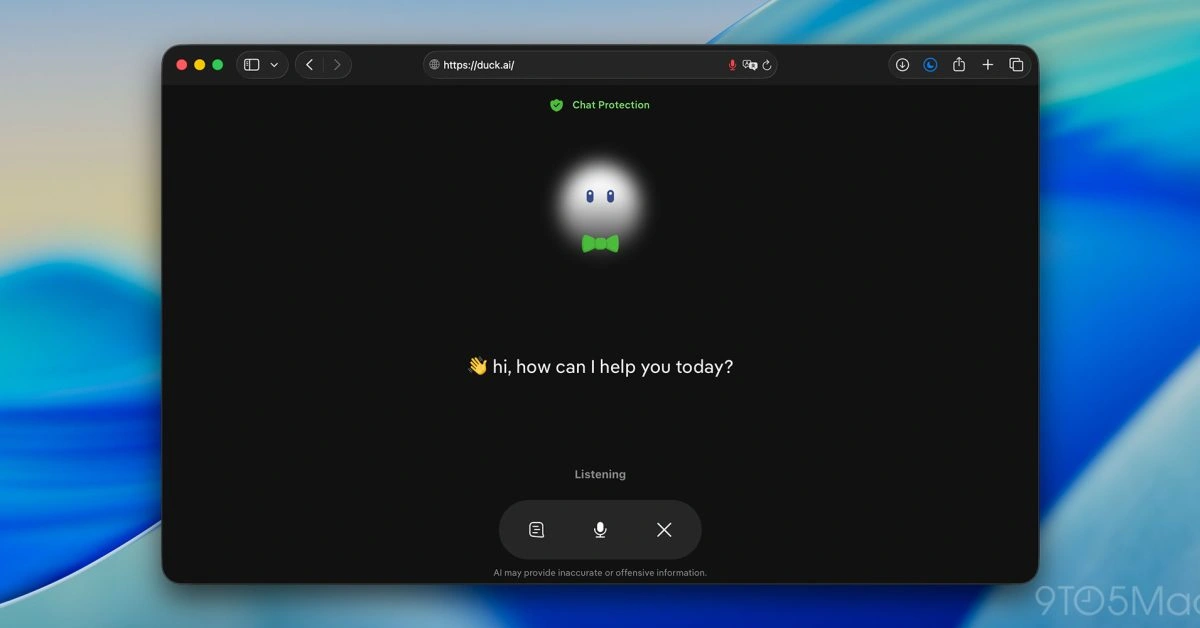
DuckDuckGo has introduced real-time AI voice chat to its Duck.ai platform, allowing users to converse with AI models through encrypted, ephemeral audio streams. The opt-in feature connects users to OpenAI models via an encrypted WebRTC relay that DuckDuckGo cannot decrypt, ensuring microphone audio is streamed live, transcribed, and responded to without storage by either company.
This marks a significant expansion for Duck.ai, launched last March as a private gateway to third-party large language models from OpenAI, Meta, Anthropic, and Mistral. Previous updates included image generation and upgraded models like GPT-4o mini, but voice chat elevates the platform's conversational capabilities while upholding DuckDuckGo's core privacy principles.
How the Feature Works
To start a voice chat, users click 'New Voice Chat' in Duck.ai's navigation, enable microphone access, and speak naturally. The AI listens in real-time, generates spoken and text responses, and ends the session without retaining audio data. No user accounts are required, and chats remain anonymizedvoice inputs are never used for training AI models.
- Audio streams only during active sessions via encrypted channels.
- Processed ephemerally; neither DuckDuckGo nor OpenAI stores it post-chat.
- OpenAI is contractually restricted to service performance only.
- Daily limits apply: free users get standard access, subscribers higher caps.
Browser support covers most modern ones, with Firefox compatibility coming soon. Users can toggle the feature off anytime in settings, reinforcing its optional nature amid growing scrutiny of AI data practices.
Privacy Safeguards in Detail
DuckDuckGo addresses voice's biometric potential head-on: while unique, it isn't used for identification or fingerprinting. A dedicated help page outlines data handling, emphasizing no linking to users and contractual limits on OpenAI's usage. This transparency builds trust, especially as competitors face backlash over data retention.
For human users like privacy-conscious professionals, this means brainstorming ideas hands-free during a commute without worrying about audio logs haunting their digital footprint. Imagine dictating a complex query on quantum computing trends to get instant, synthesized insightssecurely, without Big Tech eavesdropping.
Why This Matters
In an era where AI voice assistants from giants like Google and Amazon routinely store interactions for improvement, DuckDuckGo's approach stands out. It democratizes real-time AI conversation for the privacy-wary, proving advanced features needn't compromise anonymity. This matters for everyday users tired of pervasive tracking, offering a viable alternative that aligns tech utility with personal control.
Practical Scenario: Everyday Productivity Boost
Consider a remote worker multitasking in a home office. Instead of typing lengthy prompts into a chatbot, they activate Duck.ai voice chat to troubleshoot a coding snag: 'Explain how to optimize a Python loop for large datasets using NumPy.' The AI responds verbally with code snippets and explanations, transcribed belowall while the worker reviews docs. No login, no data trail, just efficient help that fits a hectic schedule.
Forward-Looking Implications
As DuckDuckGo hints at voice enhancements, web access for models, and broader AI integration in search, this launch signals a maturing ecosystem. It could pressure rivals to prioritize privacy, fostering competition that benefits users with more secure, feature-rich tools. Long-term, expect Duck.ai to evolve into a full-fledged private AI hub, potentially incorporating multimodal inputs like images alongside voice.
DuckDuckGo's steady rollouttext chats, images, now voicedemonstrates thoughtful expansion. By keeping features optional and local (e.g., 'Recent Chats' stored device-side), it empowers users to engage on their terms. For those integrating AI into workflows, this free tier with subscriber perks lowers barriers without sacrificing ethics.
The feature's timing, amid AI privacy debates, underscores DuckDuckGo's positioning: private, useful, optional. Early adopters gain natural-sounding interactions today, with roadmap promises like faster search AI pointing to richer experiences ahead.
This article was written by AI from reporting by 9to5mac.com.