Canonical has announced plans to integrate the NVIDIA DOCA-OFED networking framework directly into the Ubuntu Linux archive. Revealed during the NVIDIA GTC 2026 kickoff, this strategic move is designed for system administrators and infrastructure engineers managing high-performance computing (HPC) and AI environments. By embedding this framework natively, Canonical aims to drastically simplify the deployment of high-speed networking stacks.
Historically, managing networking drivers required external installers or complex manual builds, which often introduced significant operational friction. System administrators frequently faced version conflicts, kernel mismatches, and continuous integration (CI) breakages following standard OS updates. The new integrated workflow promises to eliminate common pain points like kernel drift and driver incompatibility, ensuring a more stable environment for enterprise deployments.
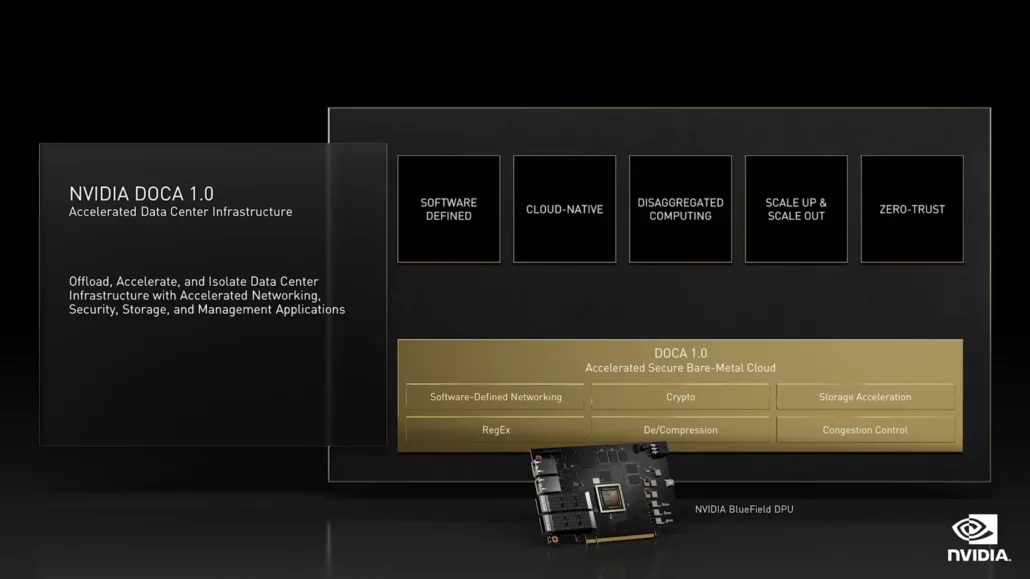
The DOCA-OFED package is a specialized subset of the broader NVIDIA DOCA software framework, which powers their BlueField networking platform, including DPUs and SuperNICs. Originally known as MLNX_OFED during the Mellanox era, this high-performance networking stack is widely adopted in large-scale AI factories and HPC clusters. It exposes advanced capabilities such as remote direct memory access (RDMA) and NVIDIA GPUDirect, providing essential CPU offload and lower, more predictable tail latency.
These ultra-low latency and high-throughput data transfers are critical prerequisites for training large language models (LLMs) and executing complex distributed simulations. The integration is delivered as the DOCA-Host networking driver stack, encompassing kernel drivers, user-space libraries, and management tools for supported NVIDIA network adapters. This development closely mirrors Canonical’s initiative last year to support NVIDIA CUDA within the Ubuntu archive, further streamlining the deployment of high-end NVIDIA hardware.
While the integration is officially confirmed, the exact release timeline remains slightly ambiguous. It is currently unclear whether the DOCA-OFED support will be fully lined up ahead of next month's highly anticipated Ubuntu 26.04 LTS release, or if it will be introduced into the archive shortly after the launch.
My Take
Canonical’s decision to natively integrate NVIDIA DOCA-OFED is a calculated move to cement Ubuntu as the undisputed default operating system for AI factories. By removing the friction of manual networking driver management - specifically the dreaded kernel drift during OS updates - Canonical is directly addressing the biggest headache for enterprise AI infrastructure engineers. As LLM training demands increasingly rely on the seamless scaling of BlueField DPUs and RDMA capabilities, reducing deployment complexity from days to minutes gives Ubuntu a massive competitive edge in the enterprise Linux market.
Frequently Asked Questions
What is NVIDIA DOCA-OFED?
It is a high-performance networking software stack designed for NVIDIA network adapters, providing advanced features like RDMA and CPU offload for AI and HPC workloads.
Will this feature be available in Ubuntu 26.04 LTS?
The exact timing is unconfirmed. It may be included in the initial launch of Ubuntu 26.04 LTS next month, or it could arrive in the archive shortly after release.
Why is this integration important for AI development?
It enables ultra-low latency data transfers and NVIDIA GPUDirect natively within Ubuntu, which are essential requirements for efficiently training large language models (LLMs).