

Table of Contents
AI Masters Advanced Math with Human Guidance
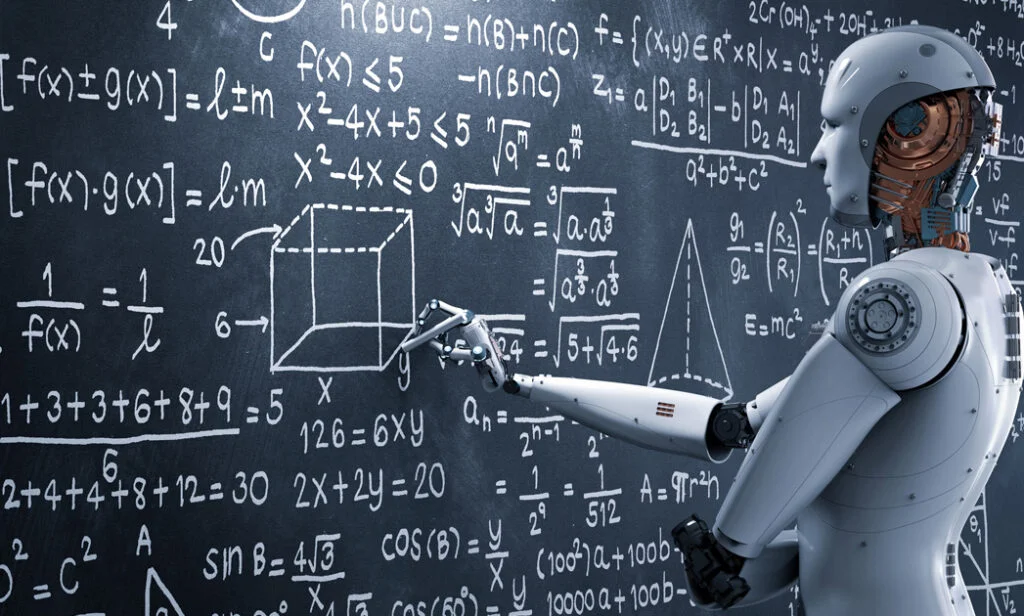
In early 2026, a software engineer tested ChatGPT powered by GPT-5.2 on a tough mathematical problem. After 15 minutes, it delivered a complete, correct solution verified by formal tools. This incident highlights AI's growing prowess in addressing open mathematical problems unsolved by humans for years.
Traditionally, large language models excelled at generating text or routine calculations. Now, they assist in deep reasoning, suggesting solutions and exploring novel approaches. This shift positions AI as a collaborator for scientists in physics, engineering, and economics, potentially speeding up discoveries.
Verification Tools Ensure Mathematical Rigor
Harmonic’s Aristotle plays a crucial role by logically checking each step of AI-generated proofs. This formal verification builds trust, confirming solutions meet strict mathematical standards rather than appearing plausible.
- AI proposes innovative paths to unsolved problems.
- Verification confirms correctness, reducing errors.
- Researchers gain reliable assistants for complex tasks.
Such tools bridge AI's pattern-matching strengths with the precision required in pure mathematics.
Labs Pioneer AI in Math Education
The Laboratory for Artificial Intelligence in Mathematics Education at Stevens Institute of Technology focuses on improving large language models' mathematical reasoning for educational use. Collaborating with industry, it addresses STEM challenges where math underpins all fields.
In January 2026, faculty like Eric Ramos, Alexei Miasnikov, and Jan Cannizzo led sessions at the Joint Mathematics Meetings (JMM 2026) in Washington, D.C., on AI in combinatorics and group theory. Miasnikov also co-organized at the International Symposium on Artificial Intelligence and Mathematics (ISAIM 2026) in Fort Lauderdale, advancing AI's role in mathematical discovery.
Terence Tao on Collaborative 'Big Math'
Fields Medal winner Terence Tao advocates for 'big math'large-scale, collaborative projects blending human and AI efforts. In a January 2026 discussion, he noted AI excels at generating ideas but requires systems to tether outputs to truth, avoiding plausible but wrong answers.
Tao highlights AI's utility in explaining problems ('rubber ducking'), scaling computations, and enabling experimental math. He cautions on downsides like overreliance, urging a 'mental diet' and new assessment methods for students.
Broader Impacts on Research and Learning
AI's math capabilities extend to research tools like Google Scholar Labs, which uses AI to analyze queries, identify topics, and explain paper relevance. This accelerates literature reviews in fields like economics and biology.
In education, frameworks like the AI in the Curriculum Playbook from UVA outline roles: AI- (human-first foundations), AI+ (augmented verification), and AI× (redesigned workflows). Fields adopting this see 3x faster research velocity.
Economist Anton Korinek emphasizes verification and human judgment in AI-driven research, ensuring systems retain critical thinking.
These advances mark a milestone: AI contributes to domains once exclusive to human intellect. Mathematicians now train models for verified solutions, fostering human-AI partnerships in discovery and teaching. As capabilities grow, expect faster breakthroughs and more accessible advanced math.