
Table of Contents
China Clears Path for Nvidia H200 AI Chips Amid Escalating Tech Rivalry
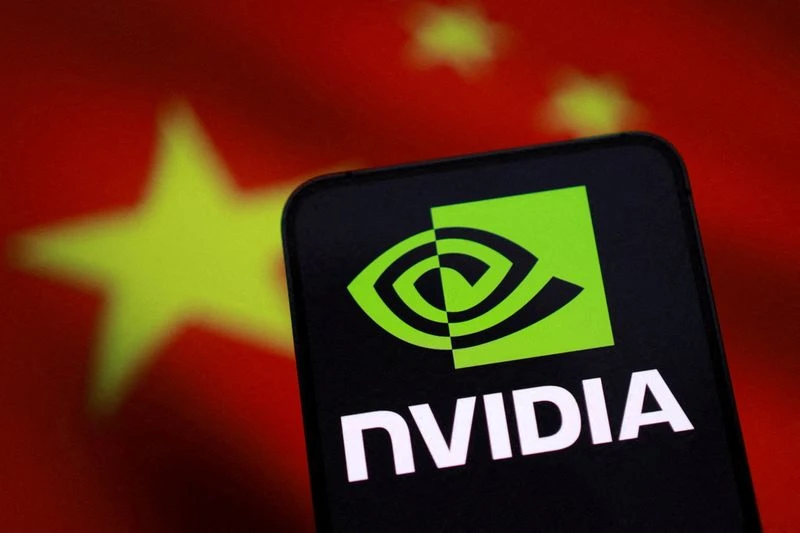
China has officially approved major tech giants ByteDance, Alibaba, and Tencent to import substantial volumes of Nvidia's H200 AI chips, a pivotal development in the ongoing global AI hardware race. Reported on January 28, 2026, this clearance comes as demand for advanced AI accelerators surges worldwide, particularly for training and running large-scale language models.
Technical Breakdown of the H200: Why It Matters
The Nvidia H200, part of the Hopper architecture family, represents a significant leap over its predecessor, the H100. It features 141GB of HBM3e memorynearly double the H100's 80GBrunning at 4.8 TB/s bandwidth. This upgrade enables handling of models up to 1.4 trillion parameters in a single GPU, critical for frontier AI tasks like multimodal generation and complex inference. Clock speeds hit 1.98 GHz boost, with 4,052 CUDA cores and 132 Streaming Multiprocessors, delivering up to 30% better inference performance on benchmarks like MLPerf.
For context, HBM3e stacks eight DRAM dies per package, using through-silicon vias for denser interconnects. This contrasts with GDDR6X in consumer GPUs, allowing sustained FP8 tensor operations at 4 petaFLOPS. Power draw peaks at 700W via 12VHPWR connectors, optimized for DGX H200 systems with liquid cooling support to manage thermal density in dense racks.
Geopolitical Context and Supply Chain Shifts
U.S. export controls since 2022 have restricted H100/H200 shipments to China, pushing firms toward domestic alternatives like Huawei's Ascend 910B or Biren Technology's chips. However, these lag in software ecosystemCUDA remains unmatched for PyTorch/TensorFlow optimizationand raw compute. The H200 approval signals Beijing's pragmatic approach: prioritize AI scaling over pure self-reliance while building Huawei's ecosystem.
- ByteDance (TikTok parent): Will accelerate Doubao model training, rivaling GPT-4 scale.
- Alibaba: Bolsters Qwen series, now open-sourced in parts, for cloud AI services.
- Tencent: Enhances Hunyuan models for WeChat integrations and gaming AI.
This isn't blanket approval; volumes are capped, monitored via China's Ministry of Commerce. It follows similar nods for H100s in 2025, but H200's memory edge makes it transformative for inference-heavy apps like real-time video generation.
Impact on Global AI Landscape
For Nvidia, this sustains revenueChina was 20% of datacenter sales pre-ban. Stock implications are muted, as U.S. firms like hyperscalers dominate new orders. Yet, it pressures U.S. policy: does easing select exports blunt China's chip push or aid competitors?
Chinese firms gain a 6-12 month lead. ByteDance could deploy 10,000+ H200s in clusters, matching Meta's Llama training setups. Alibaba's DAMO Academy projects 30% cost savings on inference versus domestic silicon. Tencent eyes edge AI for 1.4B users.
Broader ripple: accelerates Sino-U.S. AI arms race. Expect Huawei's 910C (Blackwell-equivalent) ramp-up, with 1.2TB HBM3e rumors. Software gaps persistNvidia's NVLink fabric enables 576-GPU NVSwitch domains, unmatched by CC++ in Kunpeng clusters.
Industry Reactions and Future Outlook
Analysts see this as 'controlled competition.' Bloomberg notes it reduces 'uncertainty for Chinese AI scaling.' SoftBank's parallel $30B OpenAI talks underscore mega-financing trends, but China's move is hardware-focused.
Risks remain: U.S. could tighten via BIS rules. Domestically, SMIC's 5nm yields improve, but Nvidia's 4NP process lead endures. By mid-2026, Blackwell B200 (192GB HBM3e) may face similar scrutiny.
This approval underscores AI's dual-use naturecompute as strategic asset. As hyperscalers like Advantest scale testing, bottlenecks shift to power grids and fabs. China's H200 access ensures it stays in the race, training models that could redefine search, autonomy, and beyond.