
Table of Contents
Nvidia CEO Dismisses OpenAI Rift Reports: $100B Investment Remains on Track
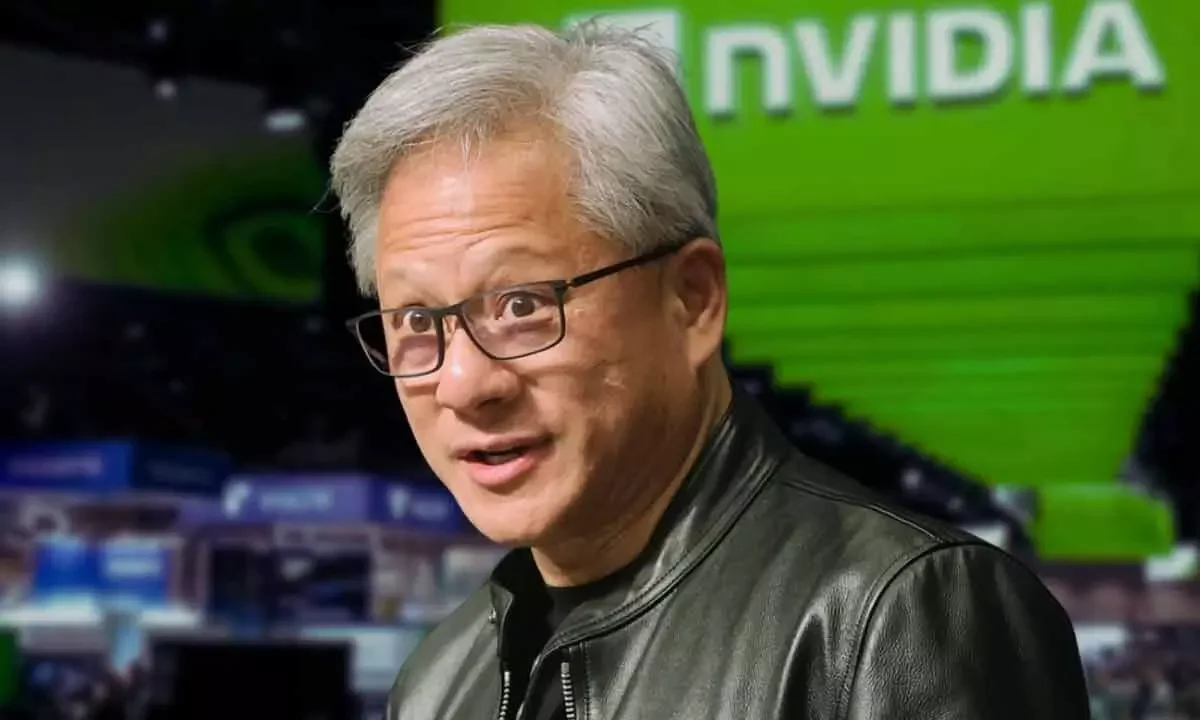
Nvidia CEO Jensen Huang has publicly rejected reports suggesting tension between the chipmaker and OpenAI, reaffirming the company's commitment to a landmark $100 billion investment and strategic partnership announced in September 2025.
The comments came after The Wall Street Journal published a report claiming Nvidia was reassessing the scale of its planned investment in OpenAI, citing concerns about the AI company's business strategy and competition from rivals like Anthropic and Google. Huang characterized these claims as "nonsense," emphasizing that Nvidia remains fully engaged with OpenAI's growth plans.
The Partnership at a Glance
In September 2025, Nvidia and OpenAI announced a letter of intent for a strategic partnership to deploy at least 10 gigawatts of Nvidia systems for OpenAI's next-generation AI infrastructure. Under the agreement, Nvidia committed to investing up to $100 billion in OpenAI progressively as each gigawatt of computing capacity comes online. The first phase is targeted to launch in the second half of 2026 using Nvidia's Vera Rubin platform.
This partnership represents one of the most significant collaborations in the AI industry, combining Nvidia's hardware expertise with OpenAI's software capabilities. The infrastructure will support OpenAI's mission to train and deploy next-generation AI models on the path toward artificial general intelligence.
Huang's Recent Statements
During a visit to Taipei, Huang told reporters that Nvidia will "definitely participate" in OpenAI's upcoming funding round, describing it as "such a good investment." He stated that Nvidia intends to "invest a great deal of money" while declining to specify the exact amount, noting that funding details should be announced by OpenAI CEO Sam Altman.
"I believe in OpenAI. The work that they do is incredible. They're one of the most consequential companies of our time," Huang said, emphasizing the strategic importance of the partnership for the broader AI ecosystem.
Huang also dismissed speculation about tensions, describing the partnership as "productive, collaborative and strategically important." He highlighted that Nvidia sees OpenAI as one of the most influential technology companies of this generation, driving innovation across research, products, and global applications.
Industry Context and Broader Implications
The partnership underscores the growing interdependence between AI software pioneers and semiconductor leaders as demand for high-performance computing accelerates. Nvidia's support extends beyond capital investment to include advanced computing infrastructure and cutting-edge chips that power large-scale AI model training.
OpenAI has grown to over 700 million weekly active users with strong adoption across global enterprises, small businesses, and developers. The company is simultaneously working with a broad network of collaborators, including Microsoft, Oracle, SoftBank, and Stargate partners, to build world-class AI infrastructure.
The partnership also reflects Nvidia's broader strategy of supporting leading innovators rather than competing directly in software development. By securing its position as OpenAI's preferred strategic compute and networking partner, Nvidia reinforces its central role as the backbone of AI development.
What's Next
OpenAI confirmed that discussions with Nvidia remain active, with both companies working through the details of their partnership. The companies plan to co-optimize their roadmaps for OpenAI's model and infrastructure software alongside Nvidia's hardware and software offerings.
The first gigawatt of Nvidia systems is expected to come online in the second half of 2026, marking the beginning of a multi-year deployment that could reshape the AI infrastructure landscape. As the AI industry continues to scale, partnerships like this between hardware and software leaders will likely become increasingly critical to supporting the computational demands of next-generation AI systems.