

Table of Contents
Velocity: Fast Project Management Built for Engineering Teams
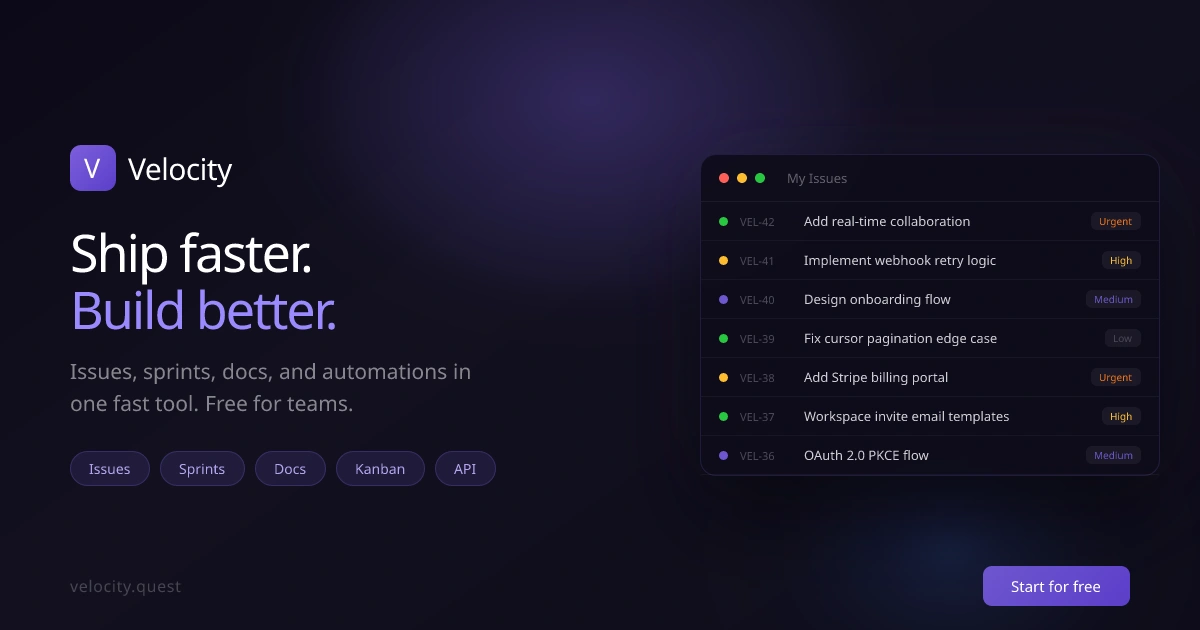
A new project management platform called Velocity has launched, targeting engineering teams that need to coordinate complex workflows across issue tracking, sprint planning, and technical documentation. The tool aims to consolidate multiple disconnected systems into a single, streamlined interface designed specifically for how engineering teams work.
What Velocity Offers
Velocity provides core project management capabilities essential for engineering teams: issue tracking for bug reports and feature requests, sprint planning tools for agile workflows, and integrated document management for technical specifications and project notes. The platform emphasizes speed and simplicity, avoiding the complexity that often comes with enterprise project management solutions.
The tool is available with a free tier that requires no credit card to get started, lowering the barrier to entry for small teams, startups, and individual developers exploring project management solutions. This freemium model aligns with how modern developer tools are typically distributed, allowing teams to evaluate the platform before committing to paid plans.
Engineering-First Design Philosophy
Unlike general-purpose project management platforms that attempt to serve all business functions, Velocity is purpose-built for engineering teams. This specialization means the interface, workflows, and features are optimized for how developers and engineers actually plan and execute work. The inclusion of document management alongside issue tracking and sprint planning reflects the reality that engineering teams need to maintain technical documentation alongside their project work.
The emphasis on speed suggests the platform prioritizes performance and responsiveness, critical factors for tools used throughout the workday. Engineering teams often work with multiple tools simultaneously, so a fast, lightweight interface can significantly improve productivity compared to slower, feature-heavy alternatives.
Market Context
The project management software market includes established players like Jira, Azure DevOps, and Asana, each with different strengths and target audiences. Jira dominates in agile software development with comprehensive velocity tracking and sprint reporting capabilities. Azure DevOps integrates tightly with Microsoft's development ecosystem. Asana focuses on cross-functional team collaboration. Velocity enters this competitive space by focusing narrowly on engineering teams' core needs rather than attempting broad functionality.
The rise of specialized tools reflects a broader trend in software development where teams increasingly prefer best-of-breed solutions tailored to specific workflows over monolithic platforms. Engineering teams have shown willingness to adopt multiple tools when each excels at its specific purpose, provided integration and data flow between tools remains manageable.
Key Features for Engineering Workflows
Issue tracking is fundamental to engineering work, allowing teams to report bugs, request features, and track their resolution. Sprint planning tools help teams organize work into manageable iterations, a core practice in agile development. The integration of documentation capabilities addresses a persistent pain point: engineering teams often maintain technical specs, architecture decisions, and implementation notes scattered across wikis, Google Docs, or other systems separate from their project management tool.
By consolidating these functions, Velocity aims to reduce context switching and keep teams focused on their work rather than managing multiple platforms. This integration is particularly valuable for onboarding new team members, who can access both the project status and the technical context needed to contribute effectively.
Accessibility and Adoption
The free-to-start model is strategically important for adoption. Engineering teams, particularly in startups and smaller organizations, often resist adopting new tools due to cost concerns or skepticism about whether a new platform will actually improve their workflow. Removing the financial barrier and credit card requirement lowers the friction for trying Velocity, allowing teams to experience the tool's benefits firsthand before deciding whether to upgrade to paid tiers.
This approach has proven successful for other developer-focused tools, where free tiers serve as effective acquisition channels. Teams that successfully integrate a tool into their daily workflow become invested in its continued use and are more likely to adopt paid features as their needs grow.
Looking Forward
Velocity's launch represents another entrant in the competitive project management space, betting that engineering teams have specific needs underserved by general-purpose platforms. The platform's success will depend on whether it can deliver on its promise of speed and simplicity while providing the depth of functionality that engineering teams require as they scale. The free tier provides an accessible entry point for teams to evaluate whether Velocity's engineering-focused approach delivers tangible productivity improvements over their current workflows.