
Table of Contents
Sony's Bold Vision for the Future of Gaming Controllers
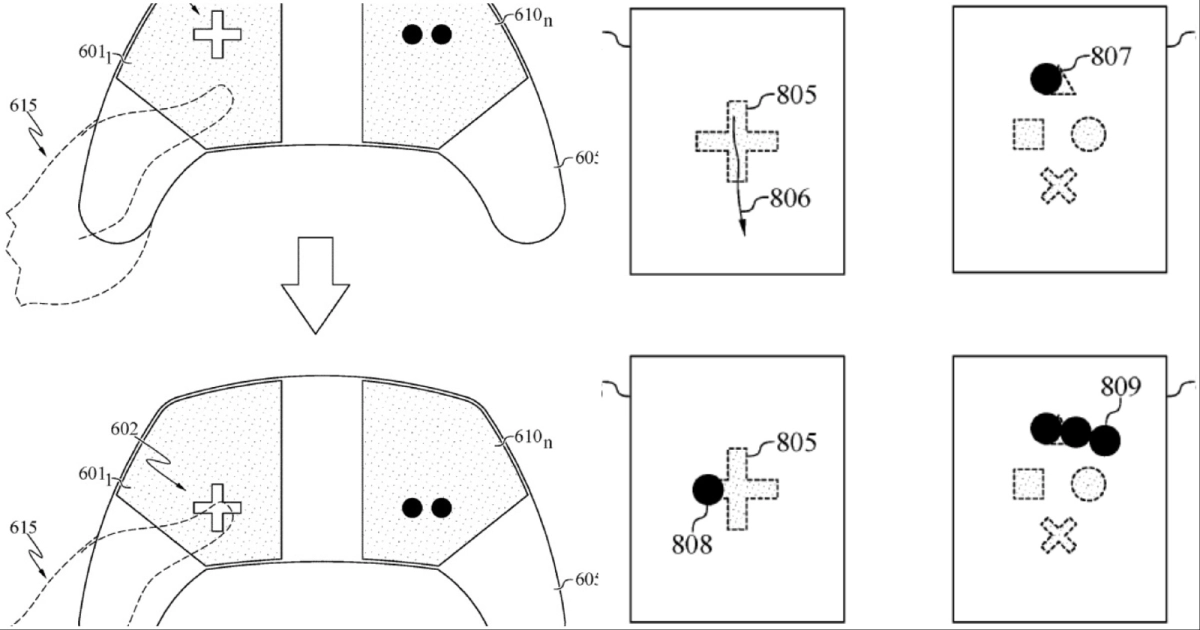
Sony Interactive Entertainment has filed a patent in the United States for a groundbreaking PlayStation controller design that transforms the traditional gamepad into a fully customizable touchscreen device. This innovation covers most of the controller's surface with a touch screen, allowing buttons and controls to be positioned dynamically based on user preferences or game requirements. The concept pushes the boundaries of hardware personalization, potentially redefining how gamers interact with their favorite titles.
The Core Innovation: A Touchscreen-Dominated Surface
At the heart of this patent is a controller where the majority of the surface functions as a responsive touch screen. Traditional physical buttons are minimized or reimagined, with virtual controls appearing exactly where needed. This setup enables gamers to remap buttons on the fly, adjust layouts for different hand sizes, or even create entirely new configurations tailored to specific games. For instance, a first-person shooter might prioritize thumbstick-like zones, while a racing game could emphasize trigger areas.
This design builds on Sony's history of controller evolution. From the original PlayStation's simple pad to the DualSense's haptic feedback and adaptive triggers in the PS5 era, Sony has consistently innovated. The touchscreen controller represents the next leap, integrating capacitive touch technology similar to smartphones but optimized for gaming precision and durability.
Unprecedented Customization Levels
The patent emphasizes an 'unprecedented level of customization,' allowing users to define control schemes intuitively. Imagine dragging and resizing virtual buttons, setting sensitivity zones, or integrating gestures for complex inputs. This could benefit accessibility, letting players with disabilities reposition controls ergonomically. Competitive gamers might fine-tune for esports precision, while casual users enjoy simplified layouts.
- Dynamic Button Placement: Virtual buttons appear and reposition via touch input.
- Multi-Touch Support: Handles simultaneous inputs across the screen surface.
- Game-Specific Profiles: Automatic switching based on loaded titles.
- Hardware Integration: Retains core elements like analog sticks and triggers for hybrid use.
Industry Context and Potential Impact
In the competitive gaming hardware landscape, Sony's patent arrives amid rivals experimenting with similar tech. Microsoft's Xbox Adaptive Controller offers modularity, and Nintendo's Joy-Cons emphasize portability. However, a full touchscreen approach is unique, potentially setting a new standard. It aligns with the growing demand for personalization in gaming, where platforms like Steam Input and console accessibility suites have popularized remapping.
If commercialized, this controller could enhance PlayStation's ecosystem. Paired with PS5 or future consoles, it might support cloud gaming via PlayStation Plus, where low-latency touch inputs shine. Developers could design games exploiting the flexibility, fostering innovative genres like gesture-based adventures or modular puzzles.
Challenges and Realistic Outlook
Patents don't guarantee products, but Sony's track recordsuch as the PSVR2 and DualSense Edgesuggests seriousness. Key challenges include touch screen durability against sweaty palms, battery life with constant display use, and learning curves for traditional gamers. Precision in fast-paced action remains critical; haptic feedback integration could mitigate 'glass fatigue.'
From a technical standpoint, the design likely employs high-refresh-rate OLED or LCD panels resistant to pressure, combined with force-touch sensors for analog-like depth. This could elevate gaming to a more intuitive, smartphone-esque experience while preserving console rigor.
Sony's move signals a future where controllers adapt to players, not vice versa. As gaming hardware matures, such innovations could democratize high-level play, making elite customization accessible to all. Gamers worldwide await whether this patent transitions from blueprint to boxed product.