
Table of Contents
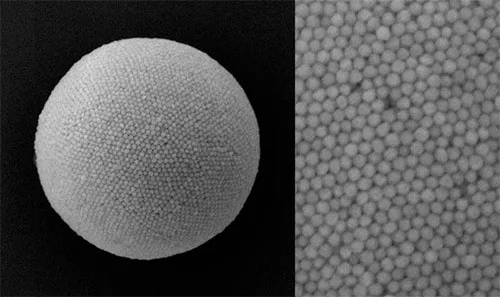
University of Texas at Austin researchers unveiled gold 'supraballs'nanospheres that absorb nearly all sunlight wavelengthson January 27, 2026, nearly doubling solar energy capture on commercial thermoelectric generators. Tests showed 89% average absorption, compared to 45% for standard gold nanoparticle films.
Supraball Design Overcomes Spectrum Limitations
Traditional solar materials capture only visible light, missing infrared and ultraviolet portions of the solar spectrum. Gold supraballs, clusters of nanoparticles, broaden absorption through plasmonic effects, simulating over 90% capture across wavelengths. The team optimized sizes via computer models before fabricating films from liquid solutions dried at room temperature.
Real-World Performance on Thermoelectric Generators
Applied to commercial thermoelectric generators (TEGs), supraball films boosted absorption under LED solar simulators. Key results:
- 89% average solar absorption for supraball-coated TEGs.
- 45% absorption for single gold nanoparticle films.
- Nearly 100% capture of some missed wavelengths.
No clean rooms or high temperatures were needed, making production scalable and cost-effective.
Advantages Over Existing Nanoparticles
Gold and silver nanoparticles absorb visible light well but limit to that range. Supraballs extend to full spectrum via structural design, offering higher efficiency without complex manufacturing. Lead researcher Seungwoo Lee noted the plasmonic structures provide a straightforward path to full-spectrum harvesting.
Potential Impact on Solar-Thermal Systems
The technology targets solar-thermal and photothermal applications, where heat from light drives energy conversion. Current systems lose efficiency on non-visible light; supraballs address this gap. Researchers project lower barriers for high-efficiency deployments in real-world settings, from power generation to water heating.
Next Steps in Material Optimization
Future work will refine supraball uniformity and test under real sunlight. Integration with photovoltaic cells could further enhance hybrid systems. The study, published in ACS Applied Materials & Interfaces, highlights supraballs as a competitive edge in advancing solar tech beyond conventional limits.
Broader Context in Solar Innovation
This builds on ongoing efforts to maximize solar yield. While perovskite and tandem cells improve efficiency, supraball coatings complement them by enhancing light capture upfront. The room-condition process contrasts with vacuum-based methods, potentially accelerating commercialization.